



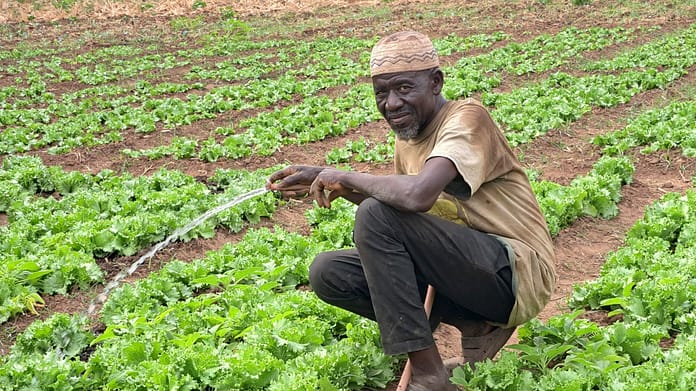
Sub-Saharan Africa urgently needs to accelerate the pace of agricultural growth to improve livelihoods, ensure food security, and keep droughts from turning into famines. However, this requires the region to increase smallholder irrigation faster than its current sluggish pace.
In this respect, explosive growth since the 1970s in distributed farmer-led smallholder irrigation (FLSI) in China, South Asia, and elsewhere may offer Sub-Saharan Africa better guidance than state-led centralized large irrigation projects. Proactive policy support, prominence of market players, economies of scale and scope, village-level irrigation service markets, government incentives, and subsidies on motor pumps and boreholes have all triggered and fueled rapid expansion of motor pump–driven FLSI that made famines history and countries food-secure in Asia in a short span of a decade or two.
With its ample shallow groundwater resources and sparse farming areas, Sub-Saharan Africa has immense potential to grow pump-driven FLSI quickly, cost-effectively, and without risking the environmental ill effects observed in Asia and elsewhere. A “big push” to FLSI will work better than an incremental trickle because high-volume-low-margin FLSI growth generates economies of scale and scope, which are essential.
Interventions by nongovernmental organizations (NGOs) are useful for demonstration and piloting innovations, but market players are best placed to achieve scale. Finally, Sub-Saharan Africa can and needs to leapfrog and build its FLSI economy around solar irrigation pumps, which are destined to disrupt FLSI globally in the years to come.
