



DODOMA, Tanzania: Tanzania has committed Sh300 billion to strengthen agriculture, livestock and fisheries, with the funding aimed at improving productivity, expanding access to finance and creating greater opportunities for young people, women and agricultural entrepreneurs.
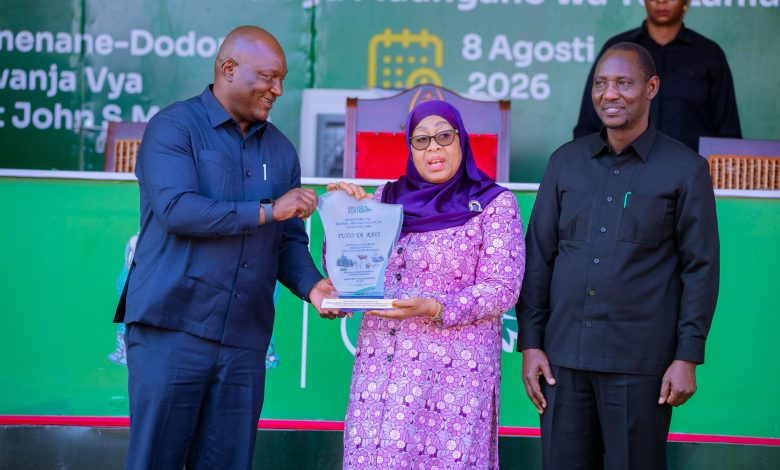
The funding was announced during the Nanenane National Farmers’ Day celebrations in Dodoma, where President Samia Suluhu Hassan handed over a symbolic Sh300 billion cheque to seven participating banks.
The banks include CRDB, Stanbic Bank, National Bank of Commerce (NBC), Tanzania Commercial Bank (TCB), Azania Bank, Cooperative Bank and Tanzania Agricultural Development Bank (TADB).
The programme forms part of the government’s broader strategy to increase investment across the agricultural value chain, while strengthening the financial capacity of TADB to provide credit for farming and related activities.
President Samia said the investment should translate into measurable improvements in agricultural productivity, production, market access and farmer incomes.
The government is also placing greater emphasis on digital agricultural extension services. President Samia directed the National Agricultural Extension Services Agency (NAESA) to strengthen extension services and complete digital systems for managing agricultural advisory activities across the country.
Digital extension platforms can provide producers with timely access to production information, market intelligence and technical guidance, helping farmers make more informed decisions on crop production and livestock management.
The President also highlighted the importance of linking production decisions to market demand, pointing to commodities such as tobacco, coffee and marine products where access to market information can influence production and commercial opportunities.
Investment in storage and agricultural value chains
Agriculture Minister Daniel Chongolo said preparations were under way to establish strategic maize and rice trading centres in four areas of Tanzania.
The centres are expected to strengthen agricultural markets, improve storage capacity and help reduce post-harvest losses, which remain a significant challenge for producers across Africa.
The government has also reached a trade agreement with South Sudan, allowing Tanzanian agricultural products to enter the neighbouring market directly. The development could create additional opportunities for producers and agribusinesses involved in grain, livestock and other agricultural value chains.
In the livestock and fisheries sectors, Minister Bashiru Ally Kakurwa said Sh30 billion had already been received from the Sh200 billion allocated to empower young people, women and other targeted groups.
Of this amount, Sh7 billion had already been disbursed, with the remaining Sh23 billion expected to be channelled through TADB for livestock and fisheries activities.
The private sector has also called for greater collaboration with government to improve agricultural efficiency and strengthen implementation of Tanzania’s long-term development priorities.
Tanzania Farmers’ Association president Jitu Vrajlal Son said stronger cooperation could accelerate investment in domestic fertiliser production, including the use of locally available raw materials such as natural gas.
Development partners also identified digital technologies, climate-resilient agriculture, agricultural value-chain investment, finance and market access as important areas for strengthening Tanzania’s farming sector.
The Sh300 billion initiative therefore represents more than a financing programme. Combined with digital extension, improved storage infrastructure, climate-smart production and expanded market access, it forms part of Tanzania’s broader effort to build a more productive, competitive and resilient agricultural sector.
