


The Fall Armyworm (Spodoptera frugiperda) remains one of the most destructive pests affecting maize production across Africa, posing a serious threat to food security and farmer incomes. Since its arrival on the continent, the pest has spread rapidly across major maize-growing regions, causing significant crop losses and increasing production costs for both smallholder and commercial farmers.
What makes the Fall Armyworm particularly dangerous is its ability to attack maize plants at an early stage of development, often before farmers realise a problem exists. The larvae are responsible for the greatest damage, feeding aggressively on leaves, stalks, and the growing points of young plants. If infestations are left unmanaged, the pest can spread quickly throughout a field, resulting in severe yield reductions and, in extreme cases, total crop failure.
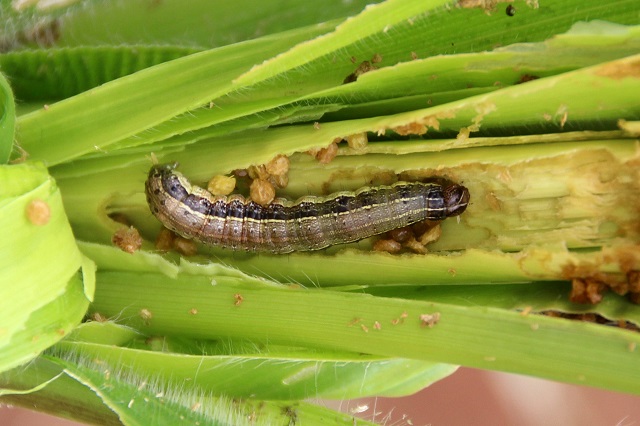
Early detection is critical for effective management. Farmers are encouraged to regularly scout their fields and watch for warning signs such as small holes in maize leaves, shredded leaf tissue, frass (caterpillar droppings) inside the whorl, and larvae hiding deep within the plant funnel. As infestations progress, damage to leaves and stalks becomes increasingly visible, affecting plant growth and productivity.
Agricultural experts emphasise that successful Fall Armyworm management requires a combination of control measures rather than reliance on a single solution. Integrated Pest Management (IPM) approaches have proven most effective, combining regular field monitoring, biological control methods, responsible use of approved insecticides, crop rotation, and good field sanitation practices. These strategies help reduce pest populations while minimising environmental impacts and slowing the development of pesticide resistance.
Across Africa, where maize remains a staple food and an important source of income for millions of households, controlling Fall Armyworm has become a priority for governments, researchers, and farmers alike. Continued awareness, early intervention, and the adoption of integrated management practices will be essential to protecting yields and strengthening the resilience of maize production systems in the years ahead.
