


Zambia is strengthening its agricultural development strategy through a nationwide soil sampling and mapping programme designed to improve fertilizer efficiency, support site-specific crop production and increase agricultural productivity by 2027.
Zambia’s agricultural sector is moving towards a more data-driven production model, with soil science and precision agriculture becoming increasingly important to national food security and sustainable agricultural development.
For decades, agricultural production across the country has relied heavily on generalized fertilizer recommendations and conventional crop management practices. However, significant variations in soil properties, nutrient availability and agroecological conditions mean that uniform input recommendations do not always deliver optimal results across different farming regions.
Recognising these limitations, the Ministry of Agriculture, with technical and financial support from the Food and Agriculture Organization of the United Nations (FAO), is undertaking a nationwide soil sampling and mapping initiative. The programme aims to establish a comprehensive understanding of Zambia’s soil characteristics and provide the scientific foundation for more targeted agricultural input management.
The initiative represents an important step towards transitioning from blanket fertilizer application to site-specific nutrient management, where fertilizer formulations and application rates are determined by actual soil requirements.
Addressing Soil Variability Through Scientific Mapping
Soil variability is one of the major factors influencing crop productivity across Zambia. Differences in soil texture, pH, organic matter content, nutrient concentrations and water-holding capacity can significantly affect crop establishment, nutrient uptake and final yields.
These variations mean that fertilizer programmes developed for one agricultural region may not necessarily be suitable for another.
For example, soil conditions in Southern Province can differ considerably from those found in Luapula and Northern provinces. Applying identical fertilizer formulations across these contrasting environments can result in nutrient imbalances, inefficient fertilizer recovery and unnecessary production costs.
The national soil mapping exercise seeks to address this challenge through systematic soil sampling and laboratory analysis across the country.
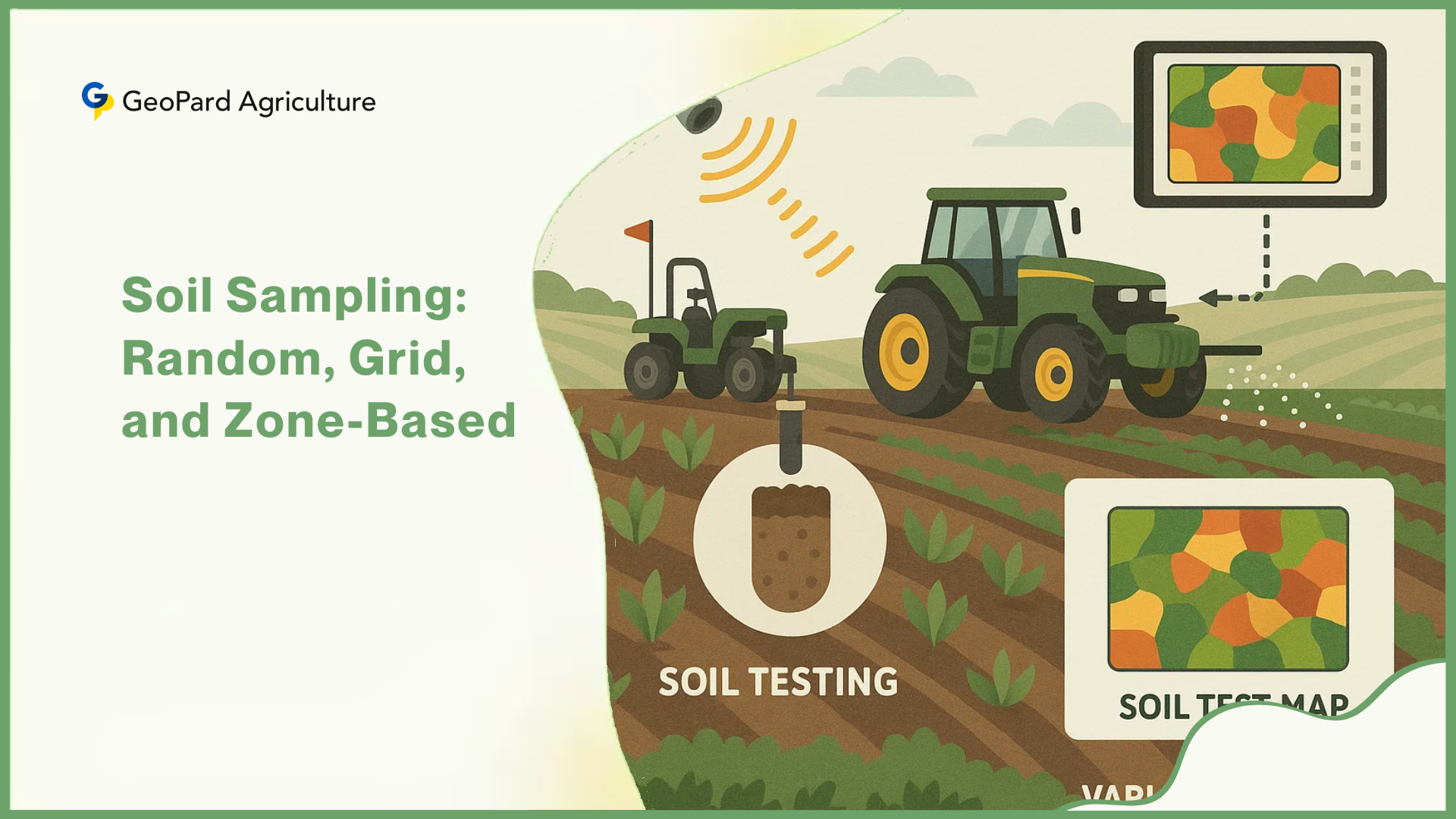
Thousands of soil samples are being collected to establish a detailed picture of soil fertility and nutrient distribution. The resulting information is expected to support the development of geographically referenced soil datasets and maps that identify differences in soil characteristics and agricultural production potential.
The exercise is expected to be completed by May 2027, providing an important technical foundation for more accurate soil fertility management and agricultural planning.
Precision Fertilizer Management and Improved Nutrient Efficiency
One of the most significant potential outcomes of the initiative is the development of fertilizer recommendations based on regional and field-specific soil conditions.
Traditional fertilizer programmes often rely on generalized nutrient formulations, which may not adequately address deficiencies or account for existing nutrient reserves in individual soils.
A more targeted approach would allow fertilizer recommendations to consider key soil parameters, including nitrogen, phosphorus and potassium availability, soil acidity, organic carbon and relevant secondary and micronutrients.
This information could support the development of location-specific fertilizer blends and more accurate application recommendations.
For fertilizer manufacturers, the findings could provide a scientific basis for formulating products that address the dominant nutrient limitations within different production zones.
For farmers, improved nutrient management could reduce unnecessary fertilizer expenditure, increase nutrient-use efficiency and support more consistent crop performance.
The longer-term objective is to ensure that fertilizer applications are aligned with crop nutrient demand, soil nutrient-supplying capacity and realistic production targets.
Matching Crop Selection to Soil Potential
Beyond fertilizer management, comprehensive soil mapping could improve decisions regarding crop suitability and land-use planning.
Different crops have distinct soil and nutrient requirements. Maize, wheat, soya beans, groundnuts and rice, for example, respond differently to soil acidity, drainage conditions, nutrient availability and soil physical characteristics.
By identifying these properties, soil maps could help agricultural planners and farmers determine which crops are best suited to particular production areas.
This approach could improve land-use efficiency by prioritising crops according to local soil conditions rather than relying exclusively on traditional cropping patterns.
It could also support more informed decisions around crop rotations, soil amendments and long-term soil fertility management.
For commercial producers, access to reliable soil information could improve production planning and investment decisions. Smallholder farmers could similarly benefit from recommendations that are better aligned with their local soil conditions and available resources.
Building a Data-Driven Agricultural Production System
The value of national soil mapping extends beyond individual farm management. The information generated could become an important resource for Zambia’s wider agricultural development strategy.
Accurate soil data can support agricultural research, extension services, fertilizer distribution planning and the identification of areas with potential for increased crop production.
When integrated with other agricultural datasets, including rainfall patterns, climate information, topography and crop performance records, soil maps could contribute to more advanced precision agriculture systems.
These datasets could eventually support digital soil fertility advisory platforms, variable-rate fertilizer application and geographically targeted agricultural investment.
However, translating soil mapping results into measurable productivity gains will require effective data management, accessible farmer advisory services and practical implementation at field level.
The success of the initiative will therefore depend not only on the quality of the soil analysis but also on how effectively the findings are converted into recommendations that farmers can adopt.
Strengthening Food Security and Agricultural Value Chains
Improving soil fertility management has important implications for Zambia’s food security and agricultural economy.
Higher and more consistent crop yields could strengthen the supply of locally produced agricultural raw materials to agro-processing industries, including maize milling, wheat processing, edible oil production and other food manufacturing activities.
More reliable agricultural production could also improve raw material availability, support investment in processing capacity and create opportunities for employment across agricultural value chains.
For soya bean and groundnut producers, improved productivity could contribute to more consistent supplies for oil extraction and food processing. Similarly, increased maize and wheat production could strengthen domestic grain supply and support downstream industries.
Reducing fertilizer inefficiencies could also improve farm profitability by allowing producers to allocate input expenditure more effectively.
These outcomes are particularly important as Zambia seeks to increase domestic agricultural production, strengthen agro-industrial development and reduce vulnerabilities within its food supply system.
From Generalized Recommendations to Precision Agriculture
Zambia’s national soil mapping initiative represents a strategic shift towards agricultural management based on measurable soil characteristics rather than generalized assumptions.
By establishing a clearer understanding of soil fertility and regional production potential, the country can develop more targeted fertilizer recommendations, improve crop suitability assessments and strengthen long-term soil management practices.
The expected completion of the mapping exercise by May 2027 will mark an important milestone. However, its long-term impact will depend on the integration of scientific findings into fertilizer formulation, agricultural extension, farm-level decision-making and national agricultural planning.
Ultimately, precision agriculture begins with understanding the production environment. For Zambia, building that understanding through comprehensive soil data could provide the foundation for more efficient input use, improved crop productivity and a stronger, more resilient agricultural economy.
