


South Africa’s agricultural sector has undergone a major technological transformation over the past three decades, with genetically modified crops and precision farming playing an increasingly important role in improving productivity, strengthening food security and supporting more efficient use of resources.
The impact of these technologies is particularly evident in grain production. Higher yields have helped increase the availability of key staple crops such as maize, contributing to greater food security and helping to moderate pressure on food prices.
For a country that is largely semi-arid and vulnerable to changing weather patterns, improving agricultural productivity is particularly important. The growing risk of drought and extreme weather makes technologies that help farmers manage water, soil and other inputs more efficiently increasingly valuable.
From GM crops to precision farming
Genetically modified organisms, or GMOs, became a major part of South Africa’s agricultural landscape in the late 1990s following regulatory approval under the Genetically Modified Organisms Act of 1997.
The adoption of genetically modified crops was driven partly by the need to improve agricultural productivity and help farmers manage challenging production conditions. Crops with improved characteristics have contributed to the development of more productive farming systems, particularly in large-scale grain production.
Precision farming has added another layer of technological advancement.
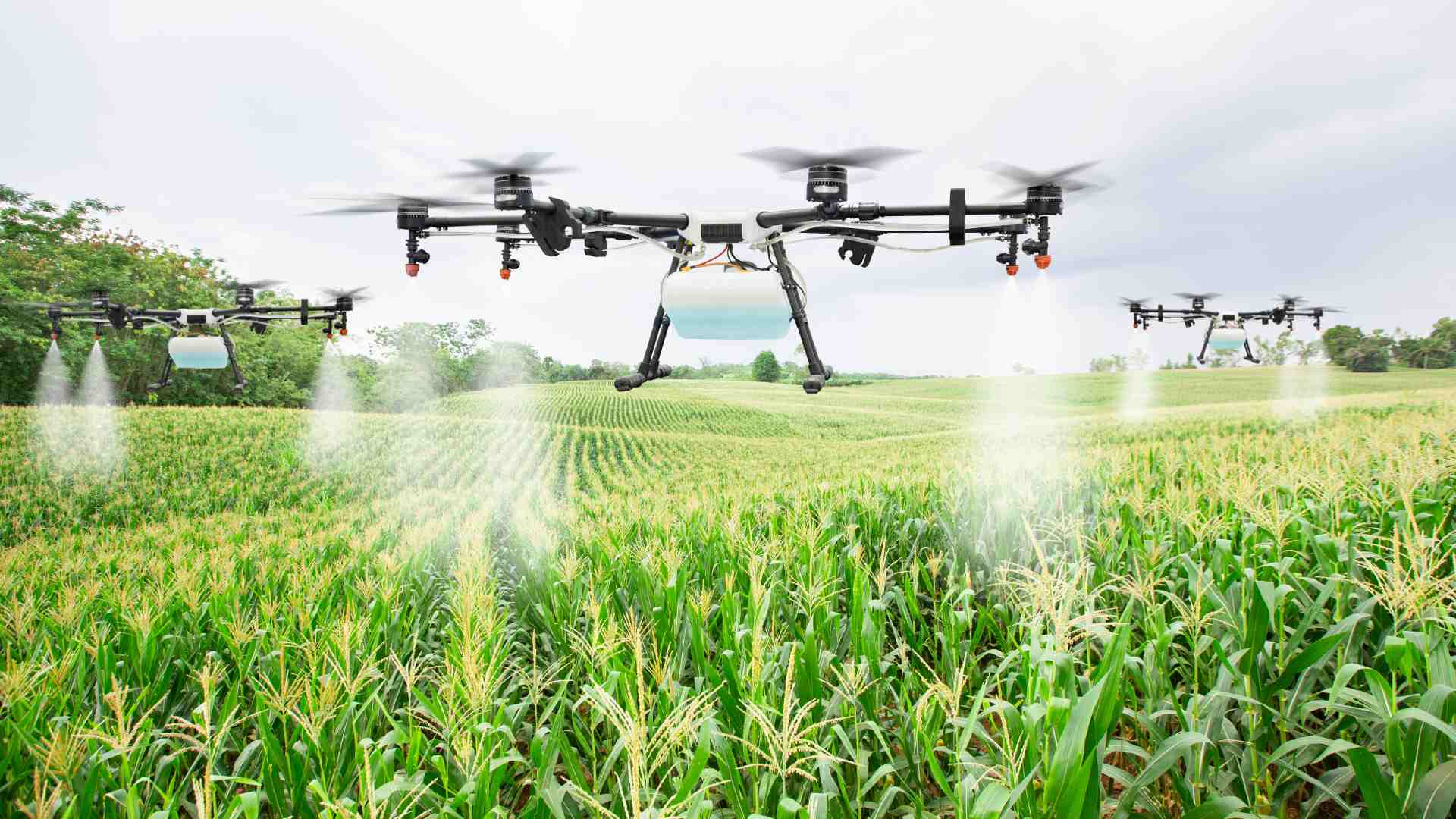
Using GPS, sensors, data analysis, drones and variable-rate application systems, farmers can make more precise decisions about where, when and how much fertiliser, seed, water and crop protection products should be applied.
This approach can reduce unnecessary input use while helping farmers optimise production across different areas of a field.
Technology driving higher maize yields
South Africa’s maize sector provides a clear example of the long-term impact of agricultural innovation.
Over the decades, improvements in mechanisation, fertiliser management, soil analysis, crop genetics and farming practices have contributed to significant increases in maize yields.
The introduction of precision agriculture and genetically modified varieties accelerated this progress, allowing farmers to combine improved crop genetics with increasingly accurate management of fields.
Modern farmers can use satellite positioning, field mapping, drones and digital data to identify differences in soil conditions, crop health and moisture levels. Instead of treating an entire field in exactly the same way, inputs can be adjusted according to specific conditions.
This can improve efficiency while reducing waste.
Protecting food security
The importance of these technologies extends beyond the farm.
Maize is a fundamental component of South Africa’s food system. White maize is widely used for human consumption, while yellow maize is an important ingredient in animal feed.
Strong maize production therefore has implications for household food prices as well as the cost of producing meat and other agricultural products.
When domestic production is strong, greater availability of grain can reduce pressure on food markets. This is particularly important for lower-income households, which typically spend a larger proportion of their income on food.
Agricultural productivity can therefore have an impact far beyond individual farms, contributing to broader economic stability and food security.
Preparing for climate challenges
The importance of agricultural technology is likely to increase as climate variability places greater pressure on farmers.
South Africa’s farming sector is vulnerable to drought, heatwaves and irregular rainfall. Technologies that improve water management, monitor crop conditions and optimise the use of agricultural inputs can help farmers respond to these challenges.
Precision farming, for example, allows producers to identify areas of a field that require more or less water, fertiliser or crop protection. Drone and satellite technologies can also help detect crop stress before problems become visible across an entire field.
These tools do not eliminate climate risk, but they can give farmers better information with which to manage it.
The next phase of agricultural innovation
The evolution of South African agriculture demonstrates how technological progress can build over time.
Mechanisation helped farmers expand production, while improvements in fertiliser management and soil science increased efficiency. Crop biotechnology and precision agriculture have added new capabilities, allowing farmers to combine genetics, data and technology to make increasingly targeted decisions.
The next phase could see even greater integration of artificial intelligence, satellite imagery, automation, sensors and farm management platforms.
For African agriculture, the opportunity is significant. The challenge will be ensuring that new technologies are accessible and practical for farmers operating at different scales, including smallholder producers.
The experience of South Africa shows that agricultural technology is not simply about adopting sophisticated equipment. Its greatest value comes when technology is combined with sound agronomic knowledge and used to solve practical challenges.
As food demand rises and climate pressures intensify, the ability to produce more efficiently while protecting natural resources will become increasingly important.
GMOs and precision farming are already part of that transformation, and the next generation of agricultural technologies could take it even further.
