



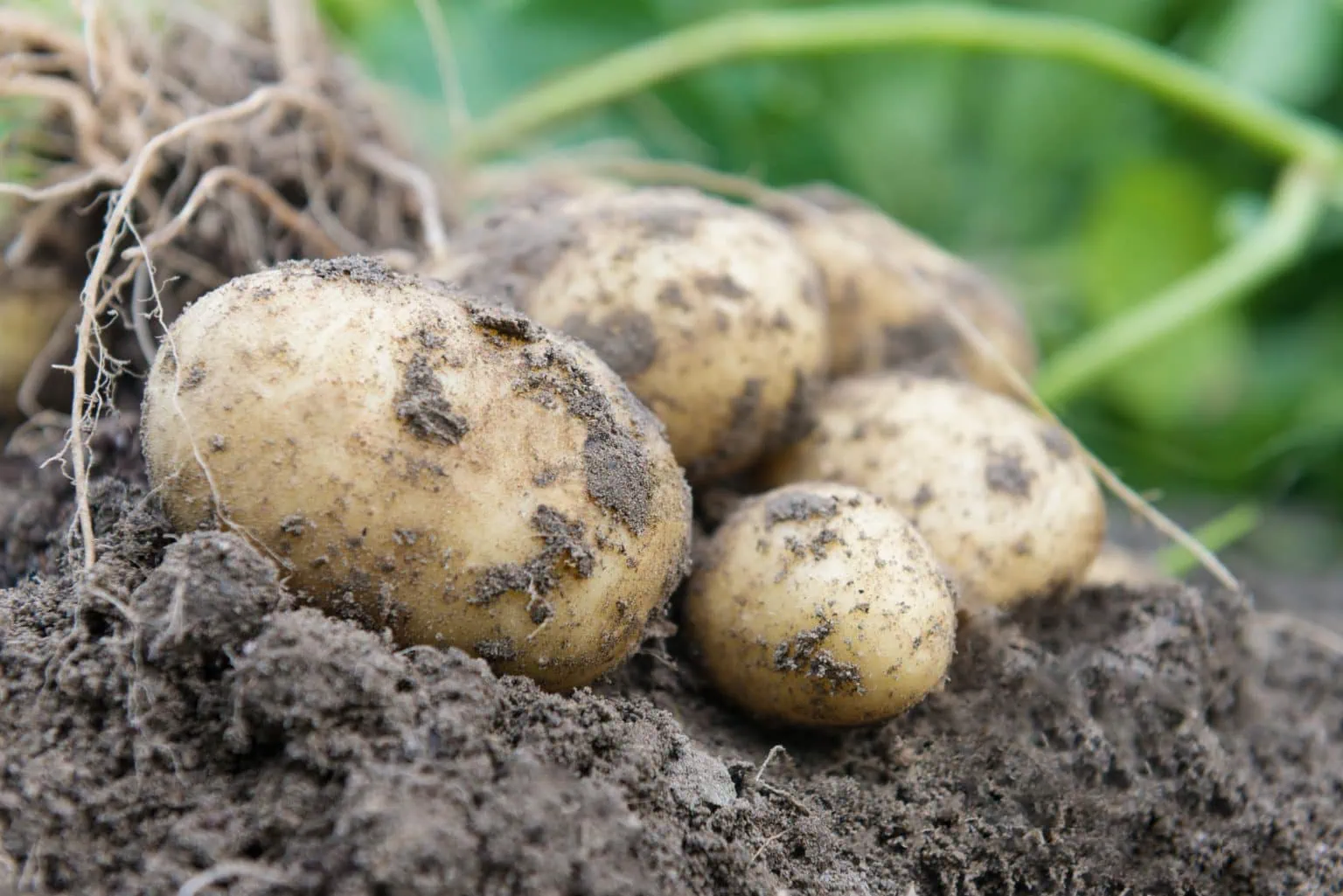
For generations, growing potatoes has meant moving tonnes of bulky seed tubers from farm to farm. In Kenya, a Dutch agricultural technology company is testing a different approach: replacing traditional seed tubers with true botanical seed that is small enough to fit in an envelope.
More than 200 Kenyan farmers are now growing potatoes using true seed rather than conventional seed tubers, while the technology is attracting attention across Africa.
Solving the potato seed problem
For many potato farmers in East Africa, access to healthy planting material is one of the biggest challenges of the growing season.
Unlike crops such as maize and beans, potatoes are traditionally propagated using seed tubers — small potatoes retained or purchased for replanting. While effective, this system has significant disadvantages. Seed tubers can carry diseases from one generation to the next, require substantial storage space and are expensive to transport.
A hectare of conventional potatoes can require around 2.5 tonnes of seed tubers. For smallholder farmers, the cost of purchasing and transporting that volume can represent a major share of production expenses.
Dutch agricultural technology company Solynta has spent more than a decade developing an alternative based on hybrid true potato seed.
From tonnes of tubers to packets of seed
Solynta’s technology uses genuine botanical potato seed rather than tubers. These seeds are produced through a hybrid breeding platform and offer several potential advantages over conventional planting material.
They are lightweight, compact and easier to store and transport. They can also reduce the risk of carrying diseases through infected planting material.
The difference in logistics is substantial. Instead of transporting tonnes of seed tubers to plant a hectare, farmers can use a relatively small quantity of true seed.
For smallholders, this could reduce transportation and storage requirements while making it easier to keep planting material available between growing seasons.
The technology also changes how potato planting material can be distributed. Seed can potentially be transported over long distances without the same bulk associated with tubers, opening possibilities for supplying farmers in areas where access to quality seed potatoes is limited.
Kenya becomes a commercial testing ground
In July 2026, Solynta received approval in Kenya for SOLHY023, the latest addition to its Hybrid True Potato Seed portfolio.
Kenya is currently the company’s main commercial market for the technology, making the country an important testing ground for whether true-seed potatoes can move from field trials into wider agricultural production.
Solynta says more than 200 Kenyan farmers have been involved since its first commercial release in July 2025. The rollout has included smallholder demonstration plots as well as larger commercial farms.
That mix is significant because agricultural technologies must perform under very different conditions. A technology that works in controlled trials still has to prove itself against variations in soil, weather, farming practices, market conditions and farmer economics.
Tackling late blight
SOLHY023 also addresses one of the potato industry’s most persistent biological threats: late blight.
The disease, caused by the pathogen Phytophthora infestans, can spread rapidly under favourable conditions and cause severe crop losses. It was responsible for the potato crop failures associated with the Irish famine in the 1840s and remains a major challenge for potato production worldwide.
Solynta says SOLHY023 contains multiple genes associated with resistance to late blight.
For farmers, stronger disease resistance could potentially reduce crop losses and dependence on repeated disease-management measures. However, the practical benefits will depend on how the variety performs under different local growing conditions and disease pressures.
Why Africa is watching
Solynta says it is working in more than 40 countries through field trials, partnerships and preparations for potential market entry. Kenya, however, remains the company’s key example of commercial deployment.
The wider opportunity is significant. Potatoes are an important food and cash crop across sub-Saharan Africa, where demand has grown alongside urbanisation and changing diets.
One of the constraints on expanding production is access to affordable, high-quality planting material. Conventional seed-tuber systems can be difficult and costly to scale because tubers are bulky, perishable and vulnerable to disease accumulation.
True potato seed could address some of those logistical and biological constraints.
The European Investment Bank has also committed €20 million toward Solynta’s mission, providing additional financial backing for the development and commercialisation of the technology.
What happens next?
The technology is still in an early stage of commercial adoption. Kenya’s experience will therefore be important in determining whether the benefits demonstrated in trials can translate into sustainable results for farmers at larger scale.
The key questions are no longer simply whether potato plants can be grown from true seed. They include whether farmers find the system economically attractive, how consistently varieties perform across different environments, and whether seed-based production can become part of established potato supply chains.
If those challenges can be addressed, the humble potato seed could have an outsized impact on how planting material moves across Africa.
What currently takes tonnes of tubers to transport could increasingly begin with a small packet of seed — potentially making one of agriculture’s most cumbersome inputs far easier to move, store and distribute.
