


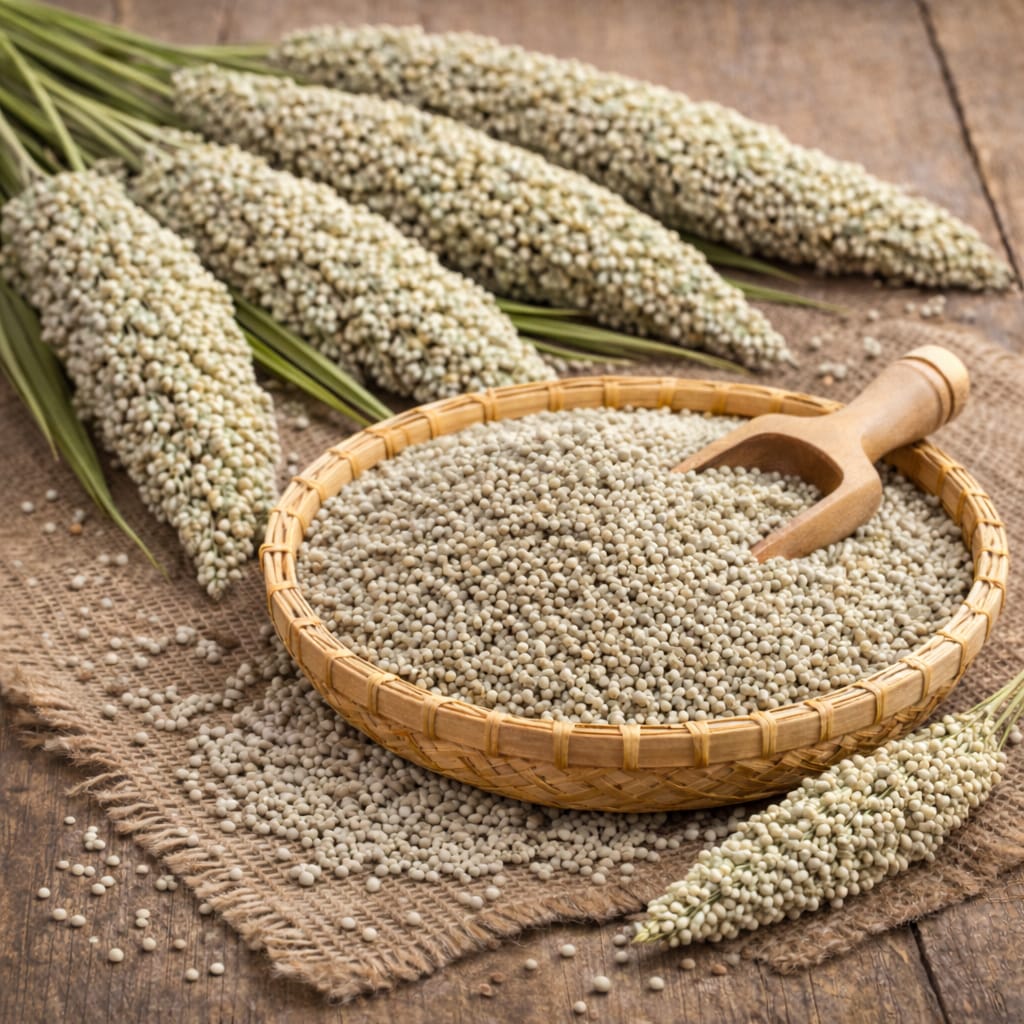
Researchers at the International Crops Research Institute for the Semi-Arid Tropics have released the first-ever biofortified pearl millet varieties specifically bred for Zimbabwe and the wider East and Southern Africa region. The two new varieties, named Iniadi Composite 1501 and ICMP 177003, carry naturally elevated levels of iron and zinc — a deliberate response to micronutrient deficiencies that disproportionately affect children, women, and low-income households across the region.
Pearl millet has long been a staple grain in Zimbabwe’s arid and semi-arid farming regions, prized for its drought tolerance in areas where maize — the country’s dominant staple — often struggles under erratic rainfall. Until now, however, standard pearl millet varieties offered limited nutritional advantage beyond their resilience as a crop, leaving a gap between the grain’s climate suitability and its potential contribution to addressing widespread iron and zinc deficiency in the communities that depend on it most.
Breeding Nutrition Directly Into a Drought-Tolerant Staple
The release was made possible through a project titled “Improving Food, Nutritional and Income Security of Smallholder Farmers in Zimbabwe’s Arid and Semi-Arid Lands through High-Yielding Iron-Dense Pearl Millet Varieties,” funded by Grow Further.
The project’s framing captures a strategy increasingly common across African crop breeding programmes: rather than treating drought resilience and nutritional quality as separate breeding objectives, researchers are working to combine both traits within a single variety, so that farmers growing a crop suited to their climate simultaneously gain a meaningful nutritional upgrade without having to switch to an entirely different, less climate-appropriate staple.
Iron and zinc deficiencies remain among the most widespread forms of micronutrient malnutrition globally, with particularly severe consequences for child cognitive development and maternal health outcomes. Because pearl millet is already deeply embedded in local diets across Zimbabwe’s drylands, biofortifying the crop directly — rather than introducing a new food source or relying solely on supplementation programmes — offers a route to improved nutrition that doesn’t require changing existing dietary habits or food preferences.
Part of a Broader Regional Legume and Grain Push
The pearl millet release lands alongside a parallel ICRISAT-led effort scaling up climate-resilient, nutrient-dense chickpea seed production across Zambia, Malawi, and Mozambique — an initiative aimed at both reducing farmers’ fertiliser dependence and improving dietary protein diversity in cereal-dominated diets.
Taken together, the two efforts reflect a consistent strategy across ICRISAT’s regional breeding programmes: addressing Southern Africa’s overlapping climate and nutrition challenges through the same set of interventions, rather than treating drought resilience and malnutrition as separate problems requiring entirely separate solutions.
ICRISAT Director General Dr Jacqueline Hughes has highlighted the broader significance of pulse and grain crops in this context, noting the interconnected ways these crops support health, agricultural resilience, and environmental sustainability simultaneously — a framing that positions biofortified staples like the new pearl millet varieties as multi-purpose interventions rather than narrow agricultural products.
Getting Seed Into Farmers’ Hands
As with similar biofortification efforts elsewhere on the continent, the real test for Iniadi Composite 1501 and ICMP 177003 will be distribution: whether seed systems, agrodealers, and extension services in Zimbabwe’s arid and semi-arid regions can get the new varieties into the hands of smallholder farmers at meaningful scale, rather than the improved genetics remaining confined to research trials.
Regional experience with similar biofortified crop rollouts — including orange-fleshed sweet potato and provitamin-A maize programmes elsewhere in Southern Africa — suggests that pairing improved seed access with targeted farmer training and, where possible, links to school feeding or other institutional buyers tends to accelerate adoption meaningfully faster than seed distribution alone.
For Zimbabwean households in drought-prone farming regions already growing pearl millet as a climate-resilient staple, the new varieties offer something rare in agricultural innovation: a genuine nutritional upgrade that asks nothing of farmers beyond continuing to grow the crop they already know, in the conditions they already farm.
