



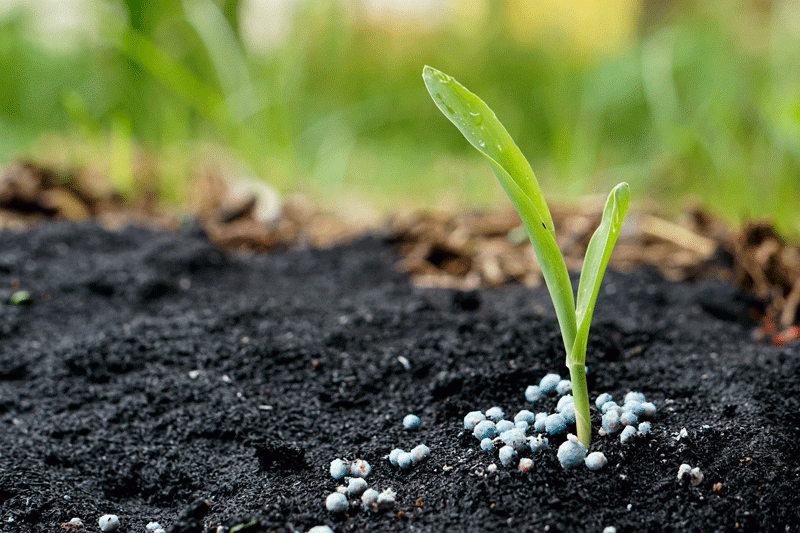
Farmers across Africa should prepare for rising fertiliser costs ahead of the 2025/2026 summer planting season, as global supply chain pressures, export restrictions, and sanctions disrupt the availability of key agricultural inputs.
In a recent analysis published by World Bank Blogs, John Baffes, senior agricultural economist at the World Bank, warned that geopolitical factors are increasingly reshaping the global fertiliser market—with Africa highly exposed due to its heavy reliance on imports.
“China’s nitrogen fertiliser exports fell by more than 90% in 2024 as authorities moved to protect domestic supply,” said Baffes. “Phosphate exports have also been restricted, and these policies have remained in place into 2025.”
Sanctions on Russia and Belarus, two major global suppliers, have further squeezed international markets. As a result, prices for urea, diammonium phosphate (DAP), and muriate of potash (MOP) are rising and could continue climbing into late 2025.
What to Expect: Fertiliser Market Forecast
- Urea prices are projected to rise 15% in 2025, before moderating in 2026 as new supply comes online in Asia and the Middle East.
- DAP prices could see further spikes in Q4, after rising 23% in the second quarter of this year.
- MOP prices are expected to increase by 5% in 2025, before stabilising next year.
Baffes noted that any new trade disruptions, natural gas price surges, or logistics delays could exacerbate the situation, especially in import-dependent regions like Sub-Saharan Africa.
Impact on African Farmers
Speaking to SubSahara Farmers Journal, Wandile Sihlobo, chief economist at Agbiz, highlighted that African countries—especially those with limited domestic fertiliser production—are highly vulnerable to international price fluctuations.
“South Africa imports about 80% of its fertiliser, but this is a shared challenge across the continent,” he said. “We must prepare for a costlier planting season, especially for smallholder and commercial growers relying on nitrogen-rich inputs.”
While current prices remain below the record highs seen during the 2022/23 crisis, Sihlobo pointed out that fertiliser costs are still well above pre-pandemic levels, posing ongoing risks to food security and profitability.
Currency Could Soften the Blow
There is a glimmer of relief: currency strength could help buffer input costs in some markets. For instance, the South African rand strengthened to R17.69/US$ in July, down from R19.10 in January, slightly easing the price impact of dollar-based fertiliser imports.
Still, the message is clear—African farmers must plan early, budget for higher input costs, and explore more efficient nutrient management to weather the coming season.
