


WorldFish in collaboration with the Royal Norwegian Embassy has launched a revolutionary solar-powered aquaponics greenhouse in Egypt, demonstrating a move towards a sustainable integrated agriculture-aquaculture- (IAA) system
A demonstration aquaponics greenhouse was established at WorldFish’s facility in Abbassa, Abu-Hammad, Sharqia. This milestone was achieved through the Centre for Renewable Energy in Aquaculture (CeREA), a four-year project funded by the Royal Norwegian Embassy in Cairo.
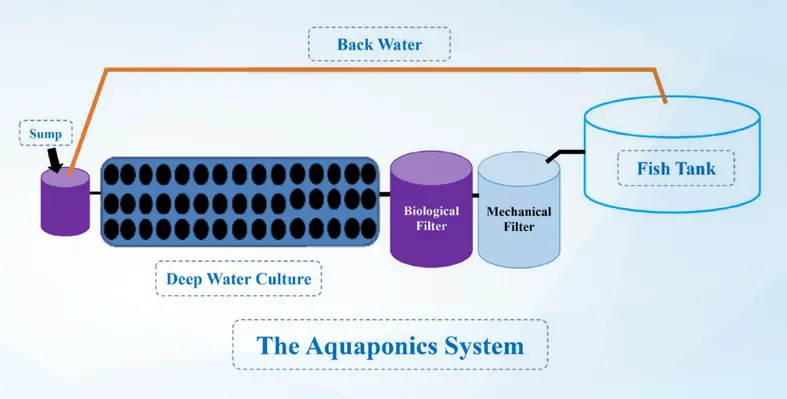
This cutting-edge system comprises two fish tanks and two deep water culture units, with each fish tank stocked with genetically improved Nile tilapia. To ensure optimal conditions for the fish, the system is equipped with two submersible pumps, two air blowers and mechanical and biological filters. This design facilitates the efficient conversion of ammonia waste to nitrate nitrogen, thereby maintaining a harmonious aquatic-environment. To ensure optimal conditions for the fish, the system is equipped with two submersible pumps, two air blowers and mechanical and biological filters. This design facilitates the efficient conversion of ammonia waste to nitrate nitrogen, thereby maintaining a harmonious aquatic-environment.
Being the largest in the Africa, Egypt’s aquaculture industry produces 2 million tons of fish annually with a production value of US$1.3bn. The waste produced by the fish provides nutrients required for the plants, while the plants filter the water for the fish, creating a harmonious cycle. By adding solar panels, a sustainable and energy-efficient farming system can be created and sustained.
“The integration of solar panels in aquaponics systems offers several key benefits. First and foremost, it reduces the reliance on traditional energy sources, thus lowering the carbon footprint of the farm, said country director of WorldFish, Egypt, Ahmed Nasr-Allah. “By harnessing the power of the sun, aquaponic farms can operate off-grid, making them ideal for remote or rural areas where access to electricity may be limited.”
