


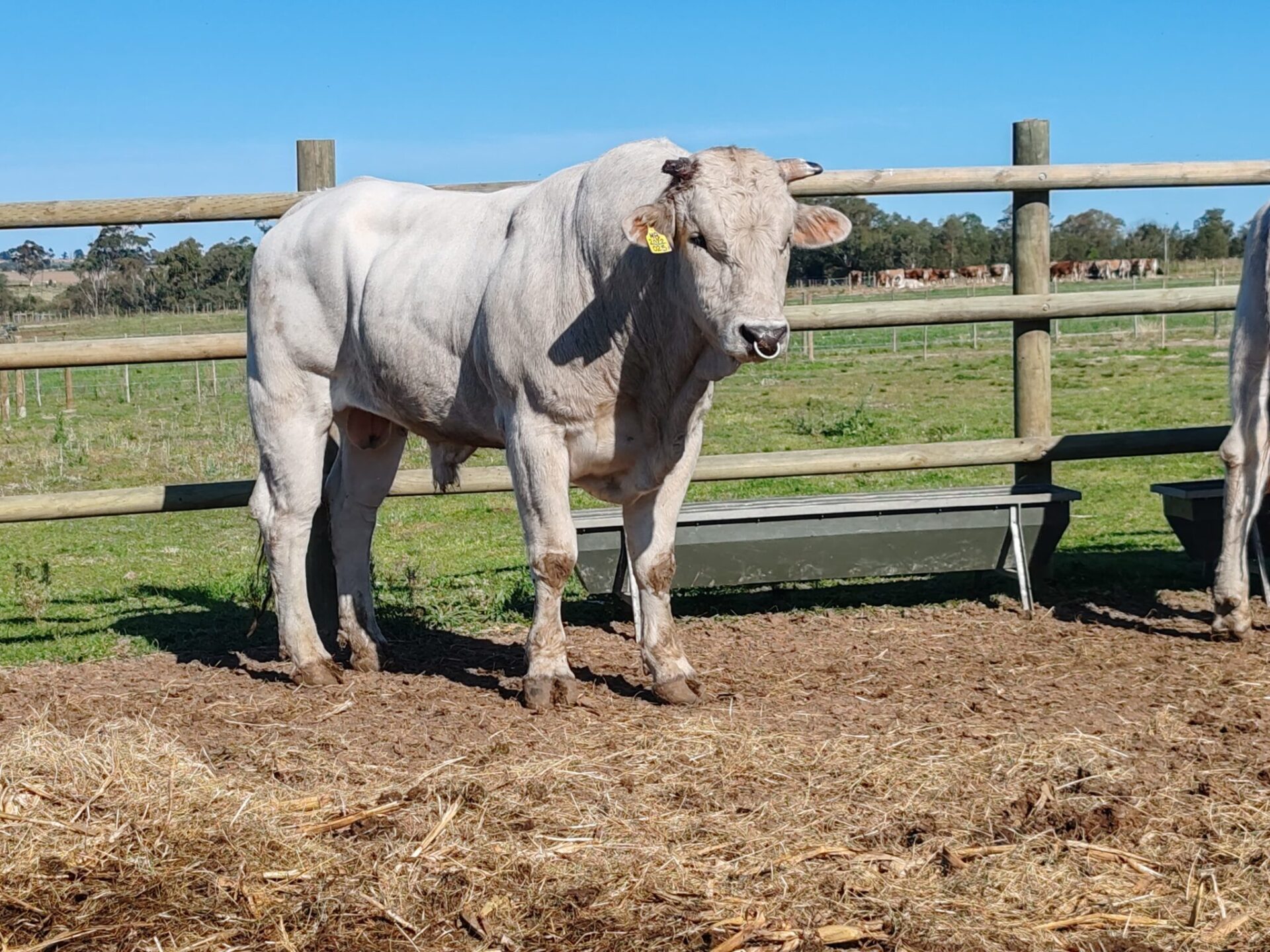
The Ariano Chianina Stud in Politsi, near Tzaneen in Limpopo, is focused on improving beef cattle productivity through selective breeding, genetic selection and intensive livestock management. Its breeding programme prioritises growth performance, feed efficiency, carcass yield, fertility and functional conformation to maximise meat production per hectare.
Owned by Riaan du Plessis, the stud works with animal production consultant Bernard Mohale to develop productive cattle suited to commercial beef production under subtropical conditions.
Established in 2021, Ariano acquired its first heifers from Christiaan de Jager’s O-la-la Chianina Stud in Badplaas, Mpumalanga. The herd currently comprises seven bulls and 10 females, including two heifers, managed under an intensive production system.
Genetic selection for growth and carcass performance
The Chianina breed was selected for its growth potential, feed conversion efficiency, meat quality and reported dressing percentages of between 63% and 65%.
According to Mohale, the stud applies strict selection criteria to identify animals that perform under supplemented feeding and pasture-based conditions. Particular attention is given to temperament, structural soundness, leg and foot quality, calving ease and overall productivity.
The herd records average daily gains exceeding 2kg per animal, demonstrating its growth potential under the stud’s management conditions.
Chianina cattle are also considered suitable for warmer production environments because of their white coats, black skin and short hair. Their adaptability and reported resistance to certain pests and parasites are additional advantages under Tzaneen’s subtropical conditions.
Pasture management and feed efficiency
Ariano operates in an environment characterised by summer temperatures reaching the high 30s, winter temperatures averaging approximately 17°C and annual rainfall of around 633mm.
The farm’s planted pastures include white buffalo grass (Megathyrsus maximus), Smuts finger grass (Digitaria eriantha), Rhodes grass (Chloris gayana) and weeping lovegrass (Eragrostis curvula).
Natural grazing across the 35ha property is dominated by red grass (Themeda triandra), alongside woody vegetation such as marula, wild pear and mopane. Although Chianina cattle are predominantly grazers, they also browse, particularly during periods of limited grazing availability.
The stud’s grazing infrastructure consists of 10 planted pasture camps, each measuring between 2.5ha and 3ha, supplemented by several natural veld camps.
Cattle are rotationally grazed, with movements between camps every three to seven days. During summer, pastures receive resting periods of approximately 30 to 45 days. Stocking rates range from 1ha to 2ha per mature livestock unit.
This intensive grazing approach is designed to improve pasture utilisation, support animal performance and increase meat production per hectare.
Artificial insemination supports genetic improvement
Artificial insemination (AI) forms an important part of Ariano’s breeding strategy. The technology enables the stud to introduce genetics from selected Italian Chianina sires without importing live animals, helping reduce associated costs and biosecurity risks.
The programme also supports the improvement of growth, muscling and maternal traits while helping manage inbreeding within the relatively small herd.
Du Plessis says approximately 30% to 40% of the stud’s top cows are artificially inseminated with proven Italian sires during each breeding season. The remaining females are serviced by the stud’s own bulls to maintain conception rates within the intensive production system.
Cattle that do not meet the stud’s breeding requirements are backgrounded in its feedlot before being slaughtered to supply the business’s butchery.
The stud also supplies breeding bulls to commercial beef producers and plans to participate in private auctions in Limpopo and Mpumalanga.
Chianina bulls in commercial crossbreeding programmes
Chianina bulls are used in terminal crossbreeding programmes to produce heavier weaners for feedlot finishing or further development on natural grazing.
The breed has been crossed with several South African breeds, including Nguni, Brahman, Bonsmara, Afrikaner, Drakensberger and Tuli cattle.
According to Mohale, these combinations can contribute to improved growth, muscling and carcass performance while retaining useful adaptability from the indigenous and locally established breeds.
Crossing Chianina bulls with Nguni or Brahman cows, for example, can produce hardy, fast-growing calves with improved carcass potential.
Ariano has also recorded positive results from its own Chianina-Nguni crossbreeding programme.
Performance recording is central to the stud’s selection process. Weaning weights range from 240kg to 320kg at 205 days, depending on seasonal conditions. The breeding programme targets an intercalving period of approximately 400 days.
Functional conformation and reproductive performance
Ariano places considerable emphasis on functional conformation when selecting breeding animals. Preferred characteristics include a tall, elongated and cylindrical body, a broad back and loin, and well-developed, convex thighs.
Du Plessis favours moderately framed, well-muscled and balanced animals with even temperaments and good handling characteristics.
The stud’s mature cows weigh between 800kg and 900kg, while bulls weigh approximately 1 300kg to 1 500kg.
These characteristics are considered important for developing functional breeding animals capable of contributing to commercial beef production.
Managing maternal traits and calving ease
Maternal performance and calving ease are also important selection considerations. Although Chianina cattle are valued for their maternal characteristics and growth potential, birth weights can range from 38kg to 50kg.
Appropriate sire selection is therefore particularly important when breeding replacement heifers.
At Ariano, heifers are managed separately on high-quality pastures and are generally first mated between 24 and 26 months of age.
Smaller-framed bulls with proven calving-ease characteristics and lower birth weights are selected for mating with heifers to reduce calving-related risks.
Through performance recording, selective breeding, artificial insemination and intensive grazing management, the Ariano Chianina Stud aims to improve genetic potential and develop productive breeding animals for South Africa’s commercial beef industry.
