


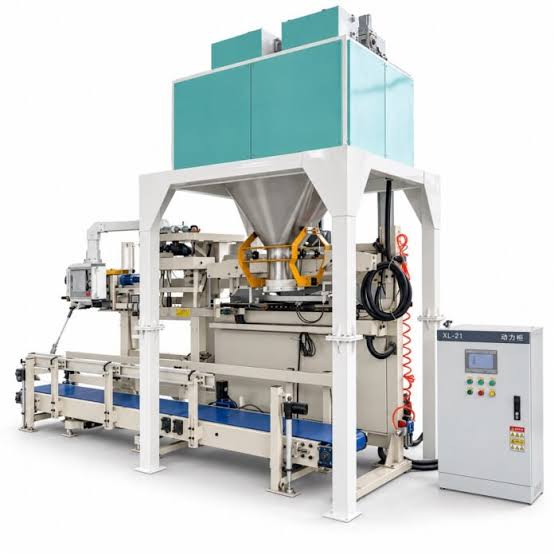
For growing fertilizer blenders and distributors, investing in a bagging machine can seem like the natural next step towards improving production efficiency. Manual filling, weighing and sewing can become increasingly difficult to manage as order volumes grow and delivery schedules become tighter.
However, replacing a manual bagging station with a faster machine is not always the best first investment.
Before purchasing equipment, businesses should identify where production inefficiencies occur and determine what prevents finished bags from being ready for dispatch. Problems may originate from inconsistent product flow, inaccurate weighing, unreliable bag closure, manual handling, pallet stacking or frequent product changeovers.
Understanding these challenges first can help businesses invest in the right equipment and avoid unnecessary costs.
- Understand the Fertilizer Product You Are Handling
The first step in selecting a fertilizer bagging machine is understanding the characteristics of the products being packaged.
Is the fertilizer a fine powder, a free-flowing granule or a blended product with varying particle sizes?
Different fertilizer formulations require different feeding and handling arrangements. Fine powders can generate dust and may require specialised feeding and dust-control systems. Granular fertilizers may contain different particle sizes and fine material, which can affect how consistently the product flows through a hopper.
These characteristics can influence weighing accuracy, filling consistency and overall machine performance.
Before requesting quotations, ask equipment suppliers which product characteristics they need to assess. Where possible, arrange a product trial using your actual fertilizer rather than relying solely on demonstrations involving other materials.
- Consider Moisture, Storage and Product Flow
Moisture can significantly affect fertilizer handling and bagging performance.
Some fertilizer products are hygroscopic, meaning they absorb moisture from their surroundings. This can cause materials to become sticky, form lumps or cake during storage, potentially disrupting the flow of product through hoppers and feeding systems.
Before assuming that weighing equipment is responsible for inconsistent bag weights, investigate whether the material is reaching the weighing system at a steady rate.
Compare freshly produced fertilizer with material that has been stored for longer periods. Record any visible lumps, changes in texture or interruptions in product flow.
Where material bridging or blockages occur inside bulk storage bins, investigations must follow authorised site safety procedures and appropriate risk assessments. General equipment guidance should never replace site-specific safety requirements.
- Select the Right Bag and Closing System
Choosing the correct packaging is just as important as selecting the filling machine.
Before purchasing equipment, establish the required bag dimensions, packaging material, liners and closing method. The machine must be compatible with the bags used by the business and capable of delivering consistent filling and secure closure.
A correctly weighed bag is not necessarily a dispatch-ready product. The sack must open reliably, maintain its shape during filling and withstand handling, transportation and storage.
Businesses handling multiple bag sizes should also consider how easily the equipment can accommodate different packaging formats.
Ask suppliers about bag guides, sewing or sealing arrangements, changeover times and compatibility with different bag materials.
It is also important to test fully filled and closed bags rather than evaluating empty packaging samples alone. Bag shape, seam positioning and overall stability can affect downstream conveying, pallet stacking and transportation.
- Evaluate the Entire Bagging and Handling Process
A bagging machine should not be assessed in isolation. Its performance depends on how effectively it connects with the rest of the production and dispatch operation.
Map the complete process, starting with product weighing and filling, followed by bag closure, inspection, conveying, palletising, storage and truck loading.
Consider where delays occur.
Are employees manually carrying every filled sack?
Do bags accumulate around the sewing or sealing station?
Is pallet stacking slowing down production?
Are finished pallets moved manually?
Does the operation experience frequent interruptions when changing products or bag sizes?
In some facilities, introducing a conveyor or assisted pallet-stacking system may deliver greater immediate benefits than investing in a fully automated bagging line.
The right solution depends on production volumes, labour availability, floor space, product variety, maintenance resources and the frequency of operational interruptions.
- Understand the Responsibilities That Remain After Automation
Automation does not eliminate every manual task. Instead, it changes how employees interact with the production process.
Even with an automated bagging system, staff may still need to supply empty bags, monitor product flow, replace sewing thread or other closure consumables, remove rejected bags, manage pallets and respond to equipment faults.
Before purchasing machinery, identify who will be responsible for these activities.
Also consider the training requirements, machine guarding, maintenance schedules and availability of spare parts.
A reliable supplier should provide a clear installation and commissioning plan, including operator training, trial production, maintenance guidance, service contacts and procedures for safely restarting equipment after a fault.
Compare Actual Production Output, Not Just Machine Speed
When comparing bagging machine quotations, businesses should pay close attention to how suppliers define production capacity.
The number of bags filled is not necessarily the same as the number of correctly weighed, securely closed and accepted bags ready for dispatch.
For example, a facility packaging 10 tonnes of fertilizer into 25 kg sacks needs to produce 400 accepted bags to complete that volume.
This calculation illustrates the relationship between product volume and bag quantity; it does not represent the hourly capacity of any particular machine.
Actual production performance should be established through trials under agreed operating conditions, taking into account product characteristics, bag changes, operational stops and other factors that affect output.
Prepare Before Requesting Equipment Quotations
A well-prepared equipment enquiry makes it easier to compare suppliers and identify suitable solutions.
Before arranging a site visit or requesting quotations, prepare the following information:
Product characteristics: Fertilizer type, particle size, moisture condition and flow properties.
Packaging requirements: Bag dimensions, materials, liners and closing methods.
Production requirements: Current and projected production volumes and target bag weights.
Facility conditions: Available floor space, electrical supply and existing equipment.
Material handling: How filled bags are conveyed, stacked, stored and dispatched.
Operational requirements: Current labour responsibilities, maintenance capabilities and common production interruptions.
After-sales support: Local technical assistance, spare parts availability and operator training.
Acceptance testing: Agreed criteria for evaluating weighing accuracy, bag closure, accepted output and overall machine performance.
It is also worth asking suppliers what they require before conducting a site assessment. Product samples, photographs of the existing production area, bag specifications and details of available utilities can help them develop more accurate proposals.
Agreeing in advance on who will provide the information and who will approve the final equipment acceptance trial can prevent costly misunderstandings.
The Right Automation Investment Starts with the Right Questions
For smaller and growing fertilizer businesses, the objective should not simply be to purchase the fastest or most automated bagging line available.
The real goal is to establish a reliable packaging process that consistently produces correctly weighed, securely closed and properly identified fertilizer bags ready for storage and delivery.
By understanding product characteristics, packaging requirements, material flow and operational limitations before purchasing equipment, businesses can make more informed investment decisions.
Whether the solution involves a semi-automatic bagging machine, an integrated conveyor system or a fully automated packaging line, successful automation starts with identifying the actual production problem and selecting equipment designed to solve it.
