



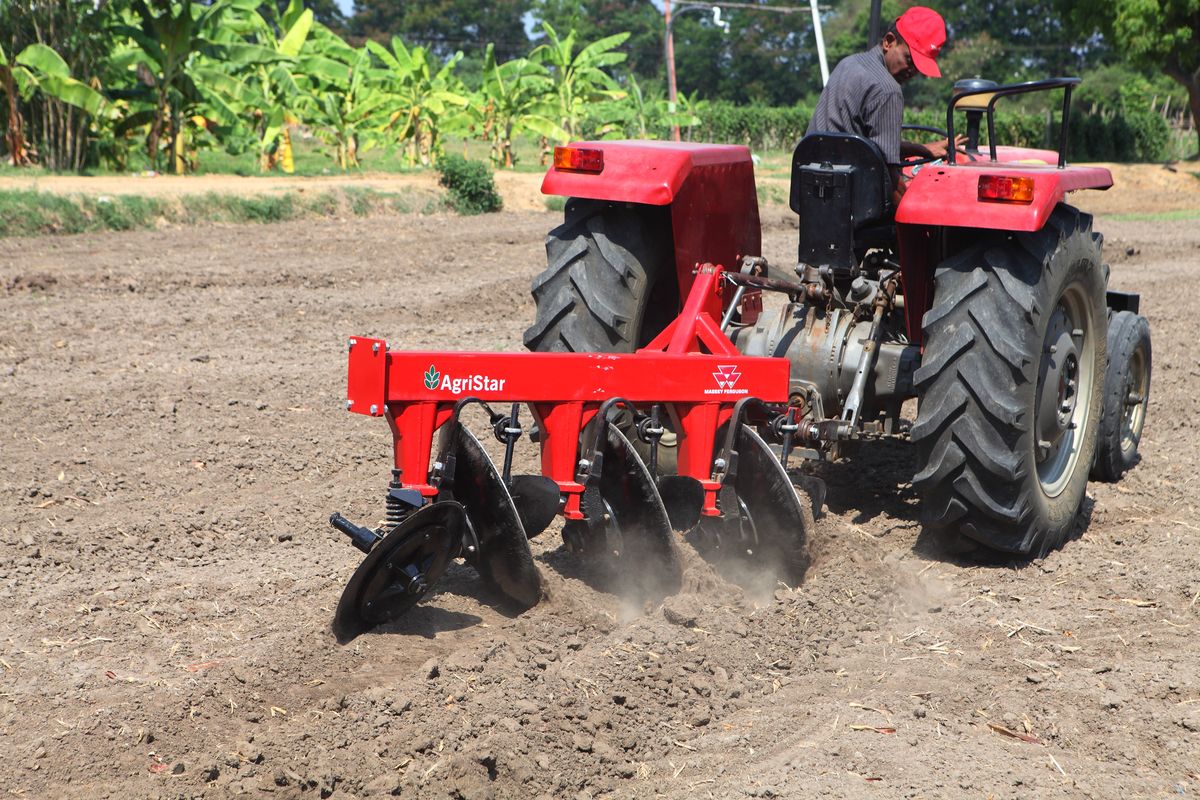
Ethiopia is stepping up efforts to modernise its agricultural machinery sector through renewed cooperation with China on teff mechanisation and a Japanese grant to support rice production and processing. The initiatives could help farmers address labour shortages, improve harvesting efficiency and reduce post-harvest losses, although affordability, maintenance and access to equipment will be critical to their success.
Ethiopia Strengthens Agricultural Mechanisation Efforts
Agricultural mechanisation is becoming an important part of Ethiopia’s strategy to improve farm productivity and strengthen food security. Developments announced in October 2026 highlight two areas of focus: advancing machinery suited to teff production and introducing modern equipment to support the country’s rice sector.
Mechanisation involves more than introducing tractors and harvesters. It can help farmers complete time-sensitive field operations, reduce labour demands, improve crop handling and connect agricultural production with processing and markets.
For Ethiopia, where smallholder farming remains central to rural livelihoods, the challenge is to ensure that machinery is affordable, suited to local conditions and accessible to farmers beyond large commercial operations.
Japan-Backed Grant Supports Rice Production and Processing
On 30 September 2026, Ethiopia and Japan signed a grant agreement worth JPY 360 million, reported by Ethiopia’s Ministry of Agriculture as approximately ETB 375 million. The agreement was reported on 1 October.
The planned investment includes combine harvesters, tractors, rice-milling machines and land-preparation equipment. The initiative aims to modernise rice production, improve processing efficiency and reduce post-harvest losses.
Combining field machinery with processing equipment could help address challenges across the rice value chain. Harvesting more rice offers limited benefits if farmers lack the facilities to process paddy efficiently, preserve grain quality and supply buyers at competitive costs.
Combine harvesters can streamline harvesting operations, reduce labour requirements and shorten the time crops remain exposed to adverse weather. Modern milling equipment can also improve processing efficiency and the quality of marketable rice, depending on machine performance, operator skills and maintenance.
However, the grant represents a planned investment rather than evidence of achieved productivity gains. Its impact will depend on equipment procurement, deployment, maintenance and farmers’ ability to access machinery services.
China Cooperation Renews Focus on Teff Mechanisation
On 13 October 2026, Ethiopia’s Ministry of Agriculture announced renewed discussions with China on agricultural mechanisation, with particular attention to teff production.
Teff is one of Ethiopia’s most important staple cereals and plays a central role in the country’s food system. Mechanising its production presents specific technical challenges because the crop’s small grains and planting requirements demand equipment capable of operating accurately under local farming conditions.
According to the ministry, the two countries agreed to assess the performance and status of machinery previously developed and tested through a teff mechanisation initiative. The assessment is expected to inform decisions on financing and the possible resumption of implementation.
The review could help identify which technologies are ready for further development and which require modification before wider adoption. Machinery designed for other crops or farming systems may not perform effectively without adjustments to planting, harvesting and field operations.
The assessment is therefore an important step towards identifying practical solutions for teff farmers. However, the renewed discussions should not be interpreted as evidence that the machinery has already been widely deployed or delivered measurable benefits.
Why Equipment Access and Maintenance Matter
The success of mechanisation programmes depends as much on service delivery as on the machinery itself.
A tractor or harvester that breaks down during planting or harvesting can cause costly delays, particularly when weather conditions leave farmers with limited time to complete field operations. Spare-parts availability, trained operators, fuel supplies and reliable repair services are therefore essential to keeping equipment operational.
For smallholder farmers, purchasing machinery individually may be financially prohibitive. Cooperative ownership, machinery-hire services and shared equipment centres can provide alternatives by distributing costs across multiple users.
These models require effective management, transparent hire charges, reliable booking systems and preventive maintenance. Without these measures, farmers may struggle to access machinery when demand peaks.
The same considerations apply to Ethiopia’s rice-sector investment. Delivering equipment to institutions or cooperatives creates an opportunity, but the benefits will depend on how efficiently machinery reaches farmers and how equitably access is managed.
Connecting Mechanisation with Markets
More mechanised farming does not automatically translate into higher profits. Farmers must weigh potential savings in labour and time against machinery-hire charges, fuel, repairs and other operating costs.
For rice producers, coordination between harvesting, milling, storage and marketing will be particularly important. Improved machinery can support production, but reliable buyers, suitable storage facilities and efficient processing determine whether additional output generates sustainable income.
For teff farmers, machinery must be tested under real farming conditions to establish whether it performs reliably and delivers economic benefits. Feedback from farmers and operators can help researchers and equipment developers refine designs before large-scale deployment.
Government agencies, research institutions, machinery suppliers, cooperatives and farmers will all play a role in ensuring that mechanisation investments deliver practical results.
Opportunities for Ethiopia’s Agricultural Equipment Industry
The initiatives could also create opportunities for machinery distributors, local manufacturers, repair workshops, fabricators, mechanics, spare-parts suppliers and technical training providers.
As machinery use expands, demand may increase for equipment servicing, operator training, preventive maintenance and machinery-hire businesses. These services will be essential to ensuring that investments remain productive long after equipment is delivered.
There is also potential for Ethiopian researchers and manufacturers to adapt imported technologies to local crops, soils and field conditions. Developing locally appropriate machinery requires technical expertise, field testing and sustained investment, but it could improve equipment suitability while supporting domestic agricultural businesses.
Implementation Will Determine the Impact
Ethiopia’s October 2026 initiatives demonstrate renewed attention to agricultural mechanisation through international cooperation and efforts to modernise domestic production systems.
The next challenge is implementation: ensuring that equipment is delivered and maintained, that the teff machinery assessment produces practical solutions, and that farmers can access services at costs justified by their expected returns.
Ultimately, the success of agricultural mechanisation should be measured not by the number of machines purchased or distributed, but by whether farmers can use appropriate equipment reliably and profitably.
By combining machinery investment with operator training, maintenance services, efficient processing and stronger market connections, Ethiopia could improve agricultural productivity, reduce post-harvest losses and create new opportunities for rural enterprises.
