



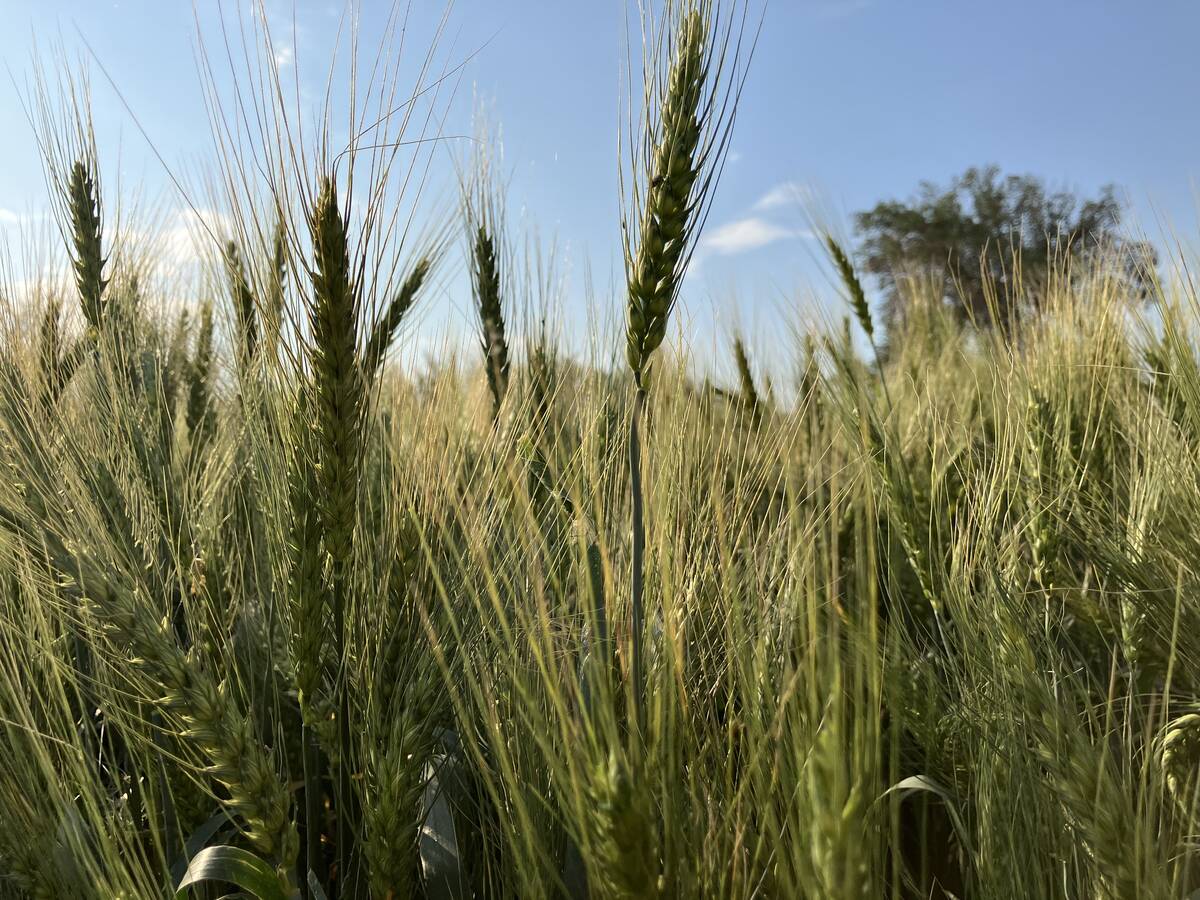
From crops that can better withstand extreme weather to varieties that stay fresh longer and require fewer inputs, technology is transforming how the next generation of crops is developed.
For decades, plant breeding relied largely on field observations. Breeders crossed plants, grew them over several seasons and selected those with desirable characteristics. While conventional breeding remains important, advances in sensors, data analysis and precision gene editing are giving breeders new tools to understand plants and make better decisions much earlier.
For South African farmers facing climate variability, rising input costs and pressure to produce more with fewer resources, these technologies could help deliver crops better adapted to local conditions.
Dr Miekie Human, science and policy manager at SANSOR, says plant breeding has evolved from selecting plants based mainly on what could be seen with the naked eye to using genetic information to make faster and more informed decisions.
“Today we have many more tools to evaluate the genetics behind those traits, allowing us to make better selections and advance breeding programmes much faster,” she says.
Modern breeding is also increasingly focused on combining multiple traits. New varieties may need to deliver high yields while tolerating drought and heat, resisting pests and diseases, using fewer inputs and remaining productive under changing conditions.
Breeding for a Changing Climate
Climate change is making this challenge more complex. Breeders are no longer focused only on drought tolerance but on developing crops capable of handling increasingly unpredictable weather.
“It’s no longer simply about drought tolerance. We need varieties that can withstand a season’s rainfall falling within a single week,” Human says.
This variability requires breeders to conduct more trials under different conditions to understand how plants respond and identify the strongest genetic traits.
Seeing What the Eye Cannot
A new Plant Phenotyping Platform at Stellenbosch University is providing researchers with advanced tools to monitor plants throughout their development.
The facility uses multispectral scanners and other sensors to continuously collect information about plants without damaging them. Researchers can measure characteristics such as plant height, biomass and plant health while the crop continues growing.
Cecile Bester, a researcher and lecturer in the Department of Genetics at Stellenbosch University, says plant phenotyping helps connect a plant’s genetics with its actual performance.
Instead of taking one measurement at the end of a growing season, researchers can track how a plant develops throughout its entire life cycle.
The sensors can also detect subtle signs of stress before they become visible to the human eye. In experiments involving increasing salinity, for example, sensor technology detected plant stress earlier and more accurately than visual observation.
This allows breeders to make more informed selections and identify promising plants sooner.
Making Better Decisions Earlier
Advanced phenotyping does not replace conventional breeding. Instead, it makes the process more efficient by helping breeders eliminate weaker candidates earlier.
Researchers are investigating whether characteristics such as disease resistance in wheat can be identified when plants are only a few weeks old. Identifying unsuitable plants at this stage could reduce the amount of time and resources spent developing them through an entire growing season.
The same technology could eventually support other agricultural decisions, including irrigation scheduling and determining when crop protection products should be applied.
Testing Water Use and Drought Tolerance
The phenotyping facility will also incorporate DroughtSpotter technology, which allows researchers to control and measure water availability with a high degree of precision.
Individual plants are grown on specialised scales that continuously monitor water use. Researchers can then recreate different environmental conditions, including drought, heavy rainfall and fluctuating water availability.
This allows them to compare how efficiently different plants use water and how well they maintain growth and productivity under stress.
The information could help breeders identify elite crop lines that combine high yields with improved water-use efficiency and greater resilience to unpredictable weather.
Building South Africa’s Breeding Capacity
The Plant Phenotyping Platform is intended to serve as a shared research facility, giving universities, public researchers and private breeding companies access to advanced equipment that could otherwise be difficult and expensive to obtain.
A second phenotyping facility is being established at the University of Pretoria to support crops grown in South Africa’s summer rainfall region. The Agricultural Research Council also has phenotyping infrastructure in Potchefstroom.
Together, these facilities could help create a stronger national network for crop research by encouraging collaboration, resource sharing and knowledge exchange.
The infrastructure will also help train the next generation of plant breeders and researchers, particularly in handling large datasets and applying data to practical breeding decisions.
Local facilities are important because breeding material can be tested under South African conditions, helping researchers develop varieties that are better suited to local environments rather than relying primarily on material evaluated elsewhere.
The Growing Role of Gene Editing
Alongside phenotyping and data analysis, gene-editing technologies such as CRISPR are opening new possibilities for plant breeding.
Gene editing allows researchers to make targeted changes to a plant’s DNA, enabling them to focus on specific characteristics such as disease resistance, water efficiency and other desirable traits.
Researchers in South Africa have produced Africa’s first gene-edited grapevine by switching off a gene associated with susceptibility to downy mildew. The edited vines also showed an unexpected ability to conserve water more effectively.
Other researchers internationally are investigating gene-edited wheat that could encourage beneficial soil bacteria to improve nitrogen fixation. Such technology could potentially reduce fertiliser requirements while maintaining crop productivity under low-nitrogen conditions.
Gene editing is also being explored to address food waste. Researchers have developed crops designed to brown more slowly, helping maintain their appearance for longer after harvesting or handling.
Extended shelf-life varieties could also reduce losses during transportation and storage while creating additional opportunities for export markets.
Other breeding programmes are investigating traits such as reduced gluten content, potentially creating new options for consumers with certain dietary requirements.
Regulation Could Influence Adoption
While many of these technologies remain in development, regulatory frameworks will play an important role in determining how quickly gene-edited crops reach farmers.
International approaches to new genomic techniques are evolving, with some jurisdictions creating different regulatory pathways depending on the type of genetic change made.
South Africa currently regulates gene-edited crops under its GMO legislation. This can result in lengthy approval processes before new varieties can reach commercial agriculture.
Industry stakeholders are engaging with government on the regulatory environment and how it could evolve alongside developments in gene-editing technology.
A regulatory approach that recognises the differences between various types of genetic modification could potentially shorten the path from research and development to commercial use while maintaining appropriate safety assessments.
Bringing Innovation to South African Farms
For farmers, the value of these technologies will ultimately depend on whether they deliver practical improvements in the field.
Better disease resistance could reduce crop losses and the need for chemical treatments. Improved water-use efficiency could become increasingly valuable in water-stressed regions. Crops that tolerate heat, drought or unpredictable rainfall could help farmers manage greater climate variability.
The ability to develop locally adapted varieties could also strengthen South Africa’s agricultural resilience and reduce dependence on breeding material developed for very different growing conditions.
The Future of Crop Breeding
The combination of advanced sensors, plant phenotyping, genetic data, large-scale analytics and precision gene editing is changing how breeders understand and select plants.
Instead of relying primarily on what can be seen in the field, researchers can increasingly monitor plants throughout their development, measure their responses to environmental stress and identify genetic characteristics with greater precision.
For South African agriculture, these advances could help breeders develop crops capable of producing more with fewer resources while adapting to increasingly challenging growing conditions.
The final result for farmers may simply be better seed: varieties that yield more, use water more efficiently, resist disease and perform reliably under changing conditions.
Behind those seeds, however, is a rapidly evolving technology ecosystem that is fundamentally changing how tomorrow’s crops are bred.
