



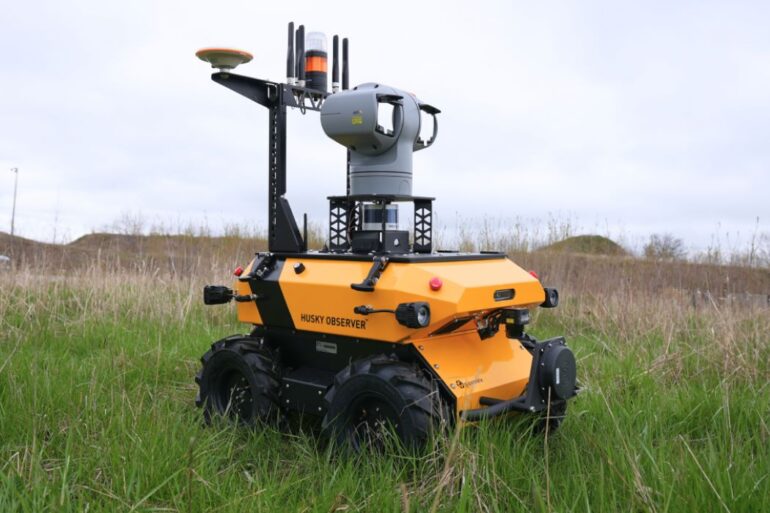
Clearpath Robotics Co-Founder Ryan Gariepy Believes Agriculture, Mining and Manufacturing Offer Major Opportunities for Robotics Adoption
As labour shortages, rising production costs, and efficiency demands continue to challenge industries worldwide, robotics and automation are rapidly becoming essential tools for improving productivity. According to Ryan Gariepy, co-founder of Canadian robotics pioneer Clearpath Robotics, many industries remain significantly under-automated despite the growing availability of practical automation technologies.
Gariepy, whose company helped establish Canada as a leader in mobile robotics before its acquisition by Rockwell Automation in 2023, believes sectors such as agriculture, mining, manufacturing, forestry, and resource extraction are poised for major transformation through robotics over the next decade.
His insights offer valuable lessons for Africa, where producers are increasingly exploring automation solutions to address labour challenges, improve operational efficiency, and boost competitiveness across agricultural and industrial sectors.
From Research to Real-World Robotics
Founded in 2009 as a spinout from the University of Waterloo, Clearpath Robotics grew into one of Canada’s most successful robotics companies. The company later launched OTTO Motors, which became a leading provider of autonomous mobile robots (AMRs) used in manufacturing and logistics operations.
Reflecting on the evolution of robotics, Gariepy says the commercial viability of the technology was driven by rapid advances in computing power, sensors, batteries, and automation systems.
These technological improvements enabled robotics to move beyond research laboratories and into practical industrial applications where businesses could achieve measurable productivity gains.
The growing success of autonomous systems in logistics and manufacturing further demonstrated that robotics could solve real-world operational challenges while delivering strong returns on investment.
Many Industries Still Under-Automated
Despite major advancements in robotics technology, Gariepy argues that most industries have yet to fully embrace automation.
According to him, several factors continue to slow adoption, including cultural resistance, limited understanding of robotics applications, and the complexity of implementing new technologies.
Many businesses understand the benefits of automation in theory but struggle to identify where robotics can be integrated into existing operations.
For agriculture in particular, the challenge often lies in demonstrating practical use cases that can deliver immediate value while remaining affordable and easy to implement.
Agriculture Among the Biggest Opportunities
Gariepy identifies agriculture as one of the sectors with the greatest potential for automation in the coming years.
Across the globe, agricultural producers are increasingly turning to robotics and precision farming technologies to improve efficiency, reduce labour dependency, and enhance productivity.
Applications already gaining traction include:
- Autonomous tractors
- Precision spraying systems
- Robotic harvesting equipment
- Automated livestock monitoring
- Smart feeding technologies
- Drone-based crop management
As Africa’s agricultural sector continues modernising, these technologies are expected to play an increasingly important role in helping farmers improve yields while reducing operating costs.
Robotics Addressing Labour Challenges
One of the strongest drivers behind automation adoption is the growing shortage of skilled labour.
Rather than replacing workers, Gariepy believes robotics should be viewed as a tool that enables existing employees to work more effectively.
Many industries, including agriculture, manufacturing, and logistics, are struggling to attract and retain workers while demand for products continues to grow.
Automation allows businesses to maintain productivity levels, improve safety, and reduce repetitive manual tasks without increasing workforce pressures.
“Our workers don’t need to work longer hours; they need better tools. Robots are those tools,” Gariepy explains.
The Reality of Artificial Intelligence and Humanoid Robots
While artificial intelligence (AI) continues generating excitement across industries, Gariepy cautions that some expectations may be unrealistic.
He believes specialised autonomous systems such as mobile robots and industrial automation platforms currently offer far greater practical value than humanoid robots.
Although impressive demonstrations of humanoid robots continue to emerge, widespread deployment in industrial environments remains some distance away due to cost, complexity, and reliability challenges.
For now, most businesses are likely to achieve better returns from purpose-built automation solutions designed to perform specific tasks efficiently.
Automation and the Future of African Agriculture
The lessons from Canada’s robotics journey are increasingly relevant to African agriculture.
As producers seek ways to improve productivity, strengthen food security, and overcome labour constraints, automation is becoming an important component of modern farming systems.
Precision agriculture, livestock monitoring technologies, automated feeding systems, and AI-driven farm management platforms are already beginning to reshape agricultural operations across the continent.
Industry experts believe that successful adoption will depend on balancing advanced technology with practical, affordable solutions that can be deployed at both commercial and smallholder farming levels.
Building a More Productive Future
Gariepy believes the next decade will see robotics become a standard part of operations across multiple industries.
For agriculture, the opportunity is particularly significant. As demand for food continues rising and production challenges become more complex, automation offers a pathway to higher efficiency, improved sustainability, and stronger competitiveness.
While challenges around adoption, investment, and skills development remain, robotics is increasingly moving from a future possibility to a present-day necessity.
For African producers looking to strengthen productivity and future-proof their operations, the question is no longer whether automation will play a role—but how quickly they can begin benefiting from it.
