


Across East Africa, farmers face mounting challenges that threaten their livelihoods, from land ownership constraints to the growing impacts of climate change and difficult socio-economic conditions. For communities that depend heavily on agriculture for survival, improving productivity while conserving resources is no longer optional—it is essential. One of the most effective strategies gaining attention is the “more crops per drop” approach, which focuses on maximizing yields while using less water. In response to these pressing challenges, the PrAEctiCe project, funded by the EU Horizon Programme, is driving innovation through Integrated Aqua-Agriculture (IAA) systems designed to support smallholder farmers with sustainable, climate-resilient farming solutions.
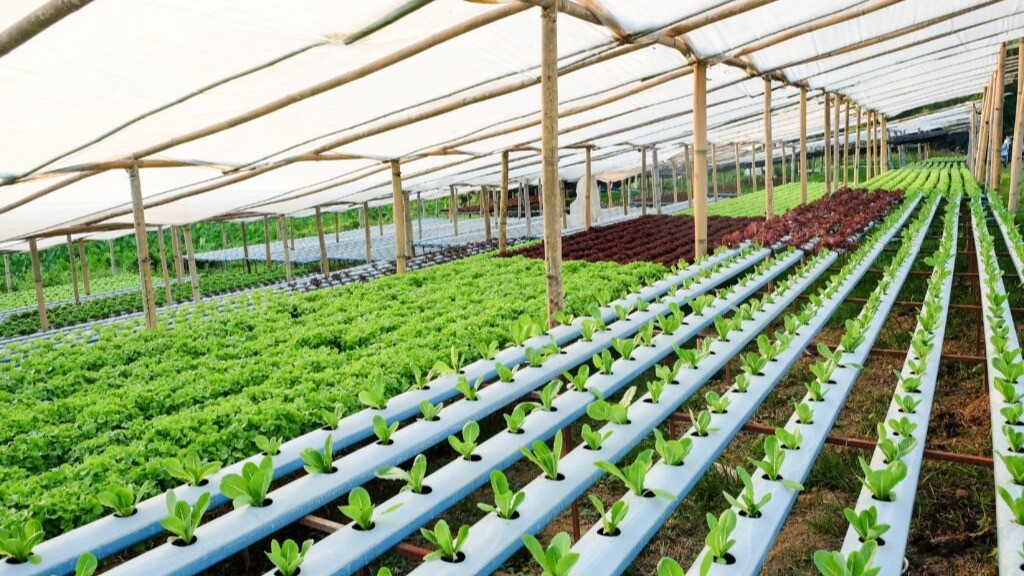
At the heart of the PrAEctiCe initiative are three innovative Living Labs established in East Africa, each demonstrating how water, energy, and nutrients can be used more efficiently. In Kisumu, Kenya, a system combining aquaculture and intercropping utilizes filtered wastewater from the city’s treatment plant through advanced membrane bioreactor technology. Water from fish tanks is reused to irrigate crops, while Black Soldier Fly larvae, produced from organic waste, provide a sustainable source of fish feed. In Kajjansi, Uganda, an aquaponics facility integrates fish farming with crop production, where nutrient-rich water from tanks containing tilapia and African catfish is used to grow tomatoes, strawberries, and lettuce. The plants naturally filter the water, which is then recirculated back into the fish tanks. Meanwhile, in Morogoro, Tanzania, a fish-poultry integration system uses chicken manure to enrich fishponds, promoting the growth of organisms that fish feed on, while water from the ponds is reused to irrigate crops.
A key feature of all three Living Labs is their reliance on renewable energy. Solar photovoltaic systems power operations, reducing dependence on unreliable electricity grids. Notably, floating solar panels have been introduced in the fishponds in Morogoro—an innovation making its debut in Africa. These panels operate more efficiently due to the cooling effect of water and require no additional land, making them both practical and sustainable.
Technology also plays a critical role in optimizing these systems. Each Living Lab is equipped with weather stations, as well as water and soil sensors that provide real-time data. This information allows farmers and researchers to closely monitor environmental conditions that influence both fish and crop production. The collected data feeds into a Decision Support Tool (DST), available as a mobile app or desktop platform, which offers tailored recommendations to farmers and advisors, helping them choose the most effective IAA practices for their specific conditions.
To further support adoption, the project has developed an interactive map showcasing 210 Integrated Aqua-Agriculture systems across the region. This tool highlights real-world applications and serves as a valuable resource for governments, NGOs, researchers, investors, and farmers. By providing insights into successful models, the map encourages the wider adoption of sustainable farming practices across Sub-Saharan Africa.
Capacity building is another cornerstone of the PrAEctiCe project. Teams managing the Living Labs received hands-on training in operating the systems and using the decision-support tools, ensuring that these sites will continue to function as demonstration farms long after the project concludes. In addition, online training modules focused on agroecology and IAA systems have been developed to educate farmers, advisors, students, and investors. These modules follow a train-the-trainer approach, making it easier to scale knowledge and accelerate the transition to sustainable agriculture.
The project also places strong emphasis on policy and long-term impact. Comprehensive policy recommendations have been developed to guide governments in creating supportive regulatory and financial environments. Workshops conducted throughout the project have helped stakeholders understand intellectual property considerations and explore pathways for scaling and commercializing innovations. Importantly, the solutions developed are designed to be adaptable, allowing them to be replicated or scaled down across other regions in Sub-Saharan Africa.
A key contributor to the project’s success is AquaBioTech Group, which played a central role in supporting operations across all three demonstration farms. The company was instrumental in designing and installing water quality monitoring systems and led the development of the interactive IAA map. Drawing on its extensive experience in agro-ecological projects across Africa, AquaBioTech provided expert consultancy in aquaculture production, developed training materials, and contributed policy briefs and scientific outputs. Its strong regional networks and collaboration with organizations such as Food and Agriculture Organization further strengthened the project’s impact through international engagement and knowledge sharing.
Ultimately, the PrAEctiCe project demonstrates that integrated, resource-efficient farming systems can transform agriculture in East Africa. By combining innovation, technology, and capacity building, it offers a scalable pathway toward improved food security, sustainable livelihoods, and climate resilience for communities across the region.
