

KONSO, Ethiopia — As the golden light of dawn spills over the rocky highlands of Konso, Kawadaya Oldisha steps into his terraced field with quiet determination. The earth beneath his feet holds centuries of knowledge — a legacy of farming techniques handed down from ancestors who learned to coax life from some of Ethiopia’s harshest terrain.
For over 400 years, the Konso people have carved out an existence on steep, erosion-prone slopes using intricate dry-stone terracing and sustainable practices. Their ancient agricultural system is so unique and effective that it’s earned UNESCO World Heritage status.
But today, this proud tradition is under threat.
“We used to know the seasons — when to plant, when the rain would come,” Kawadaya says, scanning the horizon. “Now, everything has changed.”
A New Era of Uncertainty
Climate change is rewriting the rules of farming in Konso. Rainfall once arrived like clockwork. Now, it comes too early, too late — or not at all. And when it does arrive, it often pours with destructive force, flooding fields and washing away soil that took years to build.
“I lost half my crop to floods last year,” Kawadaya says. “The year before, drought scorched the plants before they even grew.”
Kawadaya’s story echoes across the region. Smallholder farmers, who make up the backbone of Ethiopia’s rural economy, are battling extreme weather, declining soil fertility, and unpredictable growing seasons. But they are not giving up.
Blending the Old with the New
Across Konso, farmers are responding with a quiet revolution — merging ancestral wisdom with modern innovation.
“Terracing is our heritage,” says Kawadaya, “but it’s also our future.”
His small plot is a model of adaptation. Within just 20 meters, six stone terraces host a carefully curated mix of maize, beans, sweet potatoes, mangoes, and avocados. He uses drought-resistant crops, intercropping, agroforestry, and soil bunds to protect and nourish his land.
“These practices help the soil hold water, reduce erosion, and keep the land fertile,” he explains. “It’s the only way we can survive now.”
More than 80% of the land in Konso has now been terraced, according to Kussie Belay, head of the agriculture office in Karat Zuria, the district home to the Konso Cultural Landscape. “We’re seeing better yields and stronger food security,” he says. “The farmers are leading the way.”
Innovation Born of Urgency
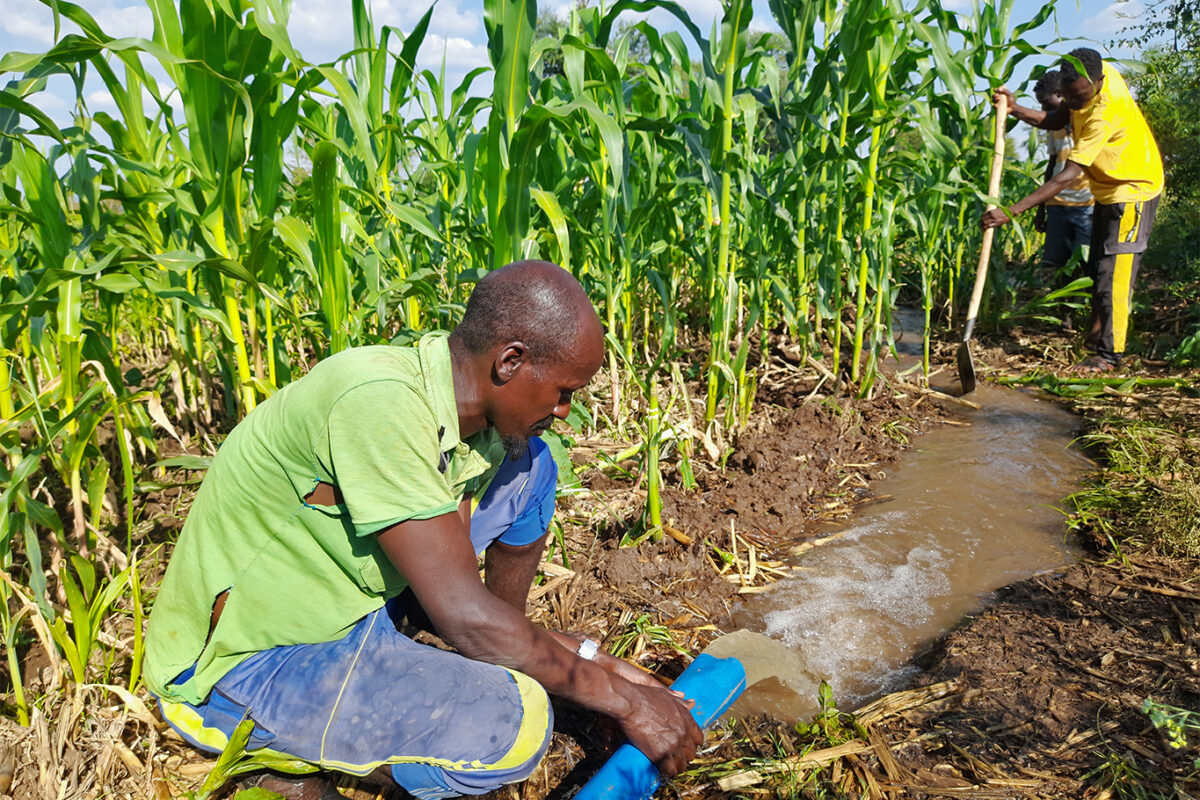
But terracing is just one part of the solution. In Tishimale village, farmers are turning to flood farming — capturing and diverting runoff from sudden rains to irrigate fields during dry spells.
Belachew Bessaya, a father of eight and head of the local farmers’ association, vividly remembers the pain of failed harvests.
“Five years ago, the rains never came. My millet dried up. I had nothing to feed my family,” he says. “We had to rely on food aid.”
Now, he and his neighbors use shovels and hoes to channel floodwaters from swollen rivers into hand-dug canals that snake across their fields. It’s tough, relentless work under a brutal sun, but the results are saving livelihoods.
“Every drop counts,” Belachew says, as water flows into his field. “This is how we fight back.”
Climate Resilience Is a Community Effort
The Konso people are not just innovating on their own farms — they’re preserving an entire cultural landscape while adapting it to new realities.
At 97, Gehano Guchiro Nekayto still walks the terraces of Mechelo village, inspecting stones and offering guidance to younger farmers. “If we stop maintaining these walls, everything will collapse,” he says. “It’s our duty to keep them strong.”
Meanwhile, women like those in Mechelo Kebele harvest moringa leaves from small trees grown on terraces. Moringa, rich in nutrients and drought-tolerant, has become a vital food source during dry seasons.
These community-led solutions reflect the findings of Yimer Mohammed Assen, a climate researcher at the University of Bonn. He warns that while local innovation is crucial, it won’t be enough without outside support.
“We must invest in localized climate adaptation strategies,” he says. “What’s happening in Konso is a global lesson in resilience — but it needs reinforcement to endure.”
Keeping the Legacy Alive
Konso’s story is one of grit, wisdom, and the will to survive against mounting odds. Farmers here are not simply victims of climate change — they are resourceful stewards of the land, keeping a centuries-old tradition alive while adapting it for the future.
“We’ve always worked with nature, not against it,” Kawadaya says. “Now we’re learning how to work with a new nature — one that’s changing faster than we ever imagined.”
As the sun sets behind the hills, the terraces glow in the fading light — a testament to the strength of a people determined to endure, and to thrive.
